Speeches
Speeches text
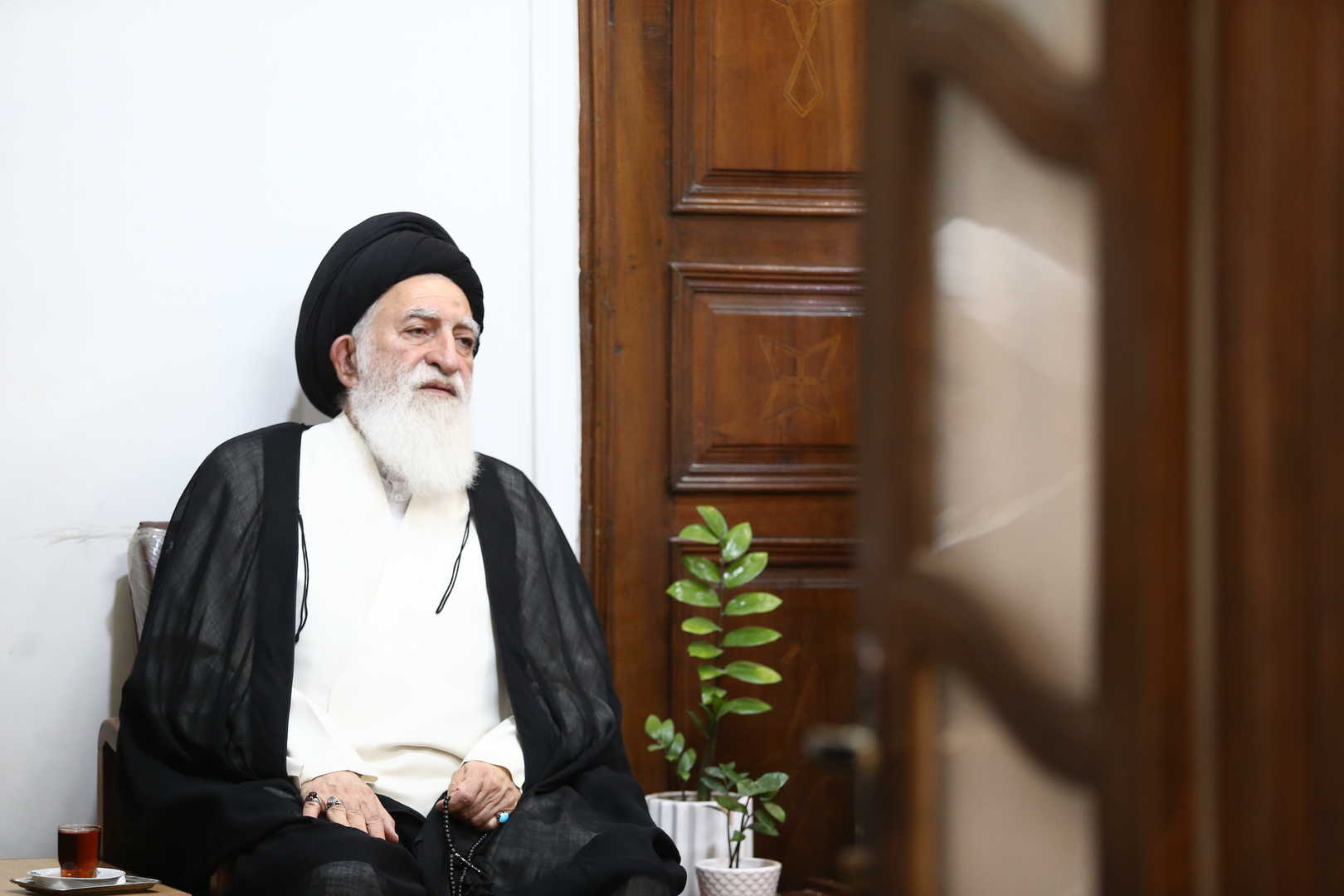
Ayatollah Alavi Borujerdi emphasized the key role of Imam Ja’far al-Sadiq (peace be upon him) in consolidating the intellectual and spiritual identity of Shiism, stating: Imam al-Sadiq himself became the reason for the growth and development of Shia thought. Had it not been for him, the teachings of the Ahl al-Bayt would not have become so widely recognized and disseminated within the Islamic Ummah today. Imam al-Sadiq laid the scientific foundations of this school, stabilized it, and introduced its standard-bearers into society—just as the Prophet Muhammad (peace be upon him and his family) presented the essence of faith, Imam al-Sadiq established the core principles of the Ahl al-Bayt school.
Citing a well-known narration from Shaykh in Rasa’il, he stated that in the mosque of Kufa, seventy pulpits were established, and on each one a preacher would say: “Ja’far ibn Muhammad narrated to me.” This indicates the wide dissemination of Shia teachings through Imam al-Sadiq (peace be upon him). It is through him that the intellectual distinction between Shia thought and the ideology of Saqifah was formed, which is why we are known as Ja’fari Shiites.
He stressed that the movement of Imam al-Sadiq was not merely an intellectual renaissance but a form of soft jihad aimed at distinguishing the true Islam from the distorted Islam of Saqifah—a movement that continues to keep Shiism alive across the world today.
Referring to post-Prophetic deviations and the prohibition of transmitting and recording hadith in the early decades, he explained that after the Prophet, the intellectual environment became severely confused, with fabricated attributions to the Prophet being widespread. In such conditions, Imam al-Baqir initiated the first scholarly movement, which was later expanded and institutionalized by Imam al-Sadiq.
He also pointed to the social and political context after Karbala, noting that the weakening of the Umayyads created an opportunity for Imam al-Baqir and then Imam al-Sadiq to present the authentic teachings of the Prophet to the people. Their aim was not formal conversion, but rather intellectual growth, awareness, and guidance.
Quoting Imam al-Ridha (peace be upon him), “May God have mercy on the servant who revives our cause,” he stated that the duty of the scholars is propagation, education, and clarification, not coercion. The Imams attracted people through knowledge and awareness, not force.
He further referred to prominent companions such as Zurara, Muhammad ibn Muslim, and Hisham, stating that many of Imam al-Sadiq’s students were initially from Sunni backgrounds but became major figures in the school of Ahl al-Bayt through his teachings. Even figures such as Abu Hanifa were influenced by the intellectual atmosphere of Imam al-Sadiq, though they followed different paths.
He added that Imam al-Sadiq not only revived the authentic Sunnah of the Prophet but also established methodological principles for resolving conflicting narrations. Even natural sciences such as chemistry benefited from his teachings, as seen in the works of Jabir ibn Hayyan.
He stated that as long as the Saqifah-oriented mindset persists, full readiness for the acceptance of true justice will not be achieved, and that the emergence of Imam al-Mahdi will occur when people themselves, consciously and willingly, move toward the justice of the Ahl al-Bayt.
In conclusion, he said that if today the testimony “I bear witness that Ali is the Wali of God” is heard across the Islamic world and the thought of the Ahl al-Bayt remains alive, it is due to Imam al-Sadiq (peace be upon him). He sent greetings upon him, prayers for Imam al-Mahdi, and respect for all followers of this enlightened school.
Content Categories
Latest Posts
Latest published speeches
Other video speeches
New