معنای جمله «ما رَایتُ الّا جمیلا»
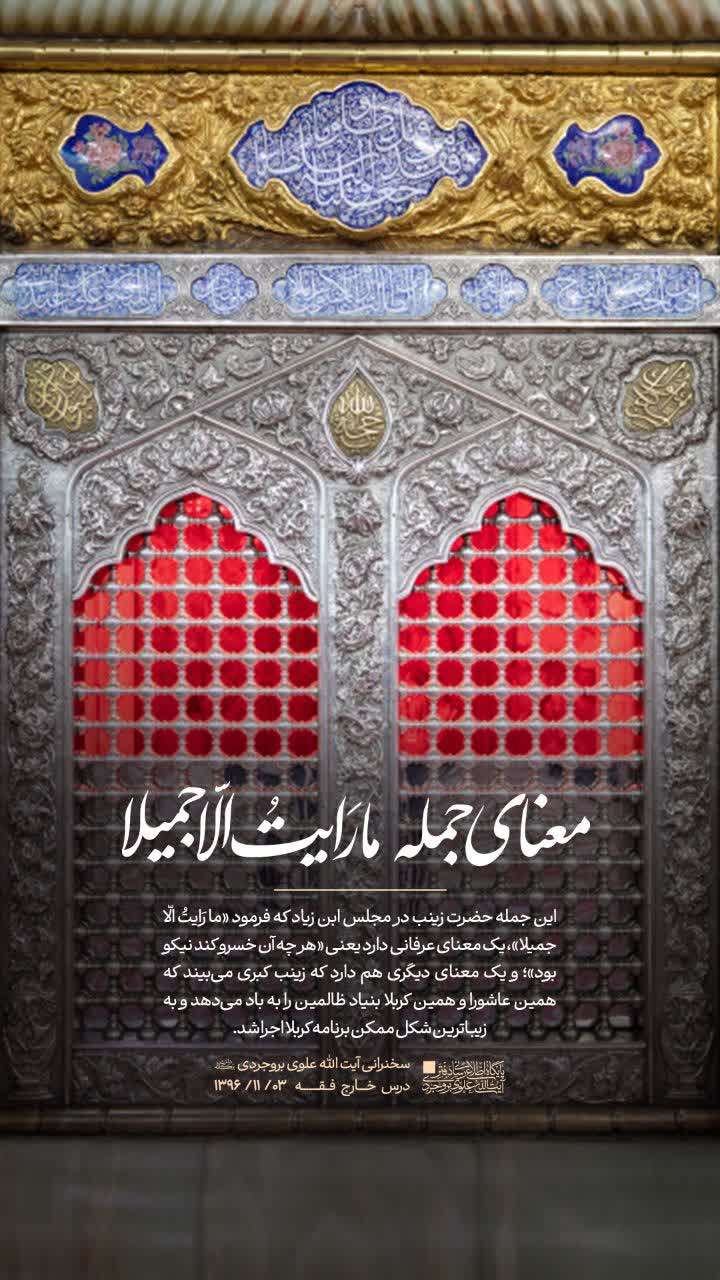
زینب کبری [بعد از واقعه عاشورا و در مجلس ابن زیاد] در حالی که همه وجودش ناراحتی وداغ است در مقابل ابن زیاد ظالم سخن میگوید و گویا آتش از دهان او بیرون میآید و بنیاد ظلم را میسوزاند؛ در جواب ابن زیاد میگوید: «ما رَایتُ الّا جمیلا» این خیلی هنر است؛… این جمله یک معنای عرفانی دارد یعنی «هر چه آن خسرو کند نیکو بود»؛ از خدای تعالی جز خیر صادر نمیشود؛ اما یک معنای دیگری هم دارد که زینب کبری میبیند؛ همین عاشورا و همین کربلا بنیاد شما ظالمین را به باد میدهد و به زیباترین شکل ممکن برنامه کربلا اجرا شد؛ حتی آن کسانی که سنگدلترین افراد شما [ظالمین] بودند، پی بردند به این که شما چه وجودهای خبیثی هستید؛ این را میخواهد بگوید؛ به این زیبایی و پاکیزگی صحنهها چیده شده بود… این جمله «ما رَایتُ الّا جمیلا»را زینب کبری دارد میگوید؛ ببینید چه دید وسیعی دارد؛ کأنّه با این جمله گفت: ابن زیاد خیال نکن تمام شد و رفت؛ فردا این قبور آباد میشود؛ مردم عاشقانه دور اینها طواف خواهند کرد!
درس خارج فقه:
تاریخ: 1396/11/3
What “I saw nothing but beauty” means?
Zainab Kubra after the tragic events of Ashura, during the gathering at Ibn Ziyad’s court while her heart is filled with grief and pain, Zainab Kubra fearlessly addresses the oppressive Ibn Ziyad. It’s as if fire emanates from her mouth, consuming the very foundation of tyranny. In response to Ibn Ziyad, she says, ‘We saw nothing but beauty.’ This statement holds both mystical and practical meanings. Mystically, it signifies that whatever the Divine King ordains is inherently good. But there’s another layer to it that Zainab perceives.
The events of Karbala, this very Ashura, dismantle the oppressive regime in the most exquisite manner. Even those who were the hardest of hearts among you, the oppressors, realized the true nature of your malevolence. Zainab wants to convey this truth. The scenes were arranged with such purity and beauty that Ibn Ziyad should not assume it’s all over. Tomorrow, these graves will flourish, and people will lovingly circumambulate them.
🔻 Date: January 23, 2018